
Free Consultation
Free Consultation
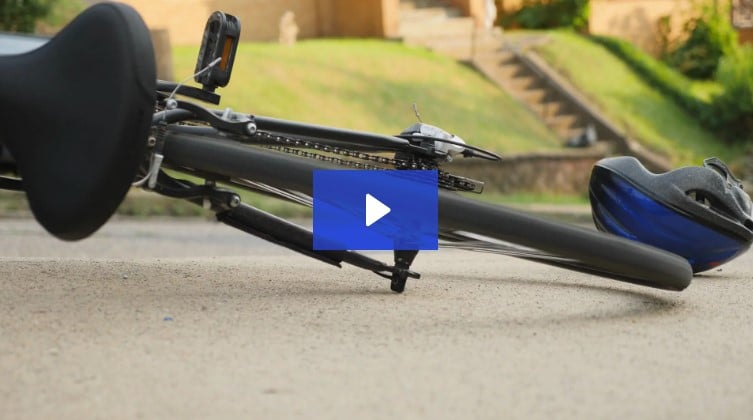
A bicycle rider hit by a car must prove two things to win a personal injury case. First, you must prove that the driver who struck you was negligent. To establish that a driver was negligent, you must demonstrate that the driver caused the accident by failing to exercise reasonable care. In addition, you must prove that you sustained a qualifying injury as a result of the accident. Unless you prove both of these elements, your case will be dismissed.
Like drivers, bicyclists must also follow specific rules. These rules can be different depending on where the accident happened. For example, accidents within the 5 boroughs of New York City follow rules established by the Department of Transportation, while accidents outside New York City generally follow New York State’s rules.
In New York City, a person riding a bicycle generally has the same rights and obligations as a person driving a car. For example, like drivers, bicycle riders must stop at red lights, yield to pedestrians in crosswalks and generally follow the rules of the road that apply to drivers.
In addition, as a bicyclist in New York City you are required to:
If you are involved in an accident as a bicycle rider and violated the rules of the road, or any of the specific rules that apply, you are still eligible to file a claim. However, if you are found to be comparatively negligent for the accident, your award will be reduced by the percentage of your fault. For example, if you are awarded $100,000, but are found to be 50% at fault, your award will be reduced to $50,000.
In New York City, only children under the age of 13, and working bicyclists, are legally required to wear helmets. Even though there is no legal requirement to do so, everyone riding a bicycle should wear a helmet. If you don’t, you run the risk of slamming your unprotected head into a car, or the roadway, when an accident happens.
In fact, in our own “unscientific” study of cases handled by our attorneys, clients who did not wear a helmet usually were much more susceptible to skull fractures and brain injury than riders who wore a helmet. So, wear a helmet even if you are not legally required to do so.
Bicyclists injured in car accidents are entitled to No-Fault benefits. These benefits are paid by the insurance company of the car involved in the accident. Your medical bills are paid in full, even if the accident was your fault. The only legal requirement to be eligible for No-Fault benefits is that you must fill out, and send in, a No-Fault Application within 30 days of the accident. You are also entitled to lost earnings, as well as other expenses, under No-Fault insurance.
To win a personal injury case after being hit by a car while riding your bicycle, you must prove two main elements:
Negligence: You must demonstrate that the driver who struck you failed to exercise reasonable care and caused the accident.
Qualifying Injury: You must prove that you sustained a “serious” or qualifying injury as a result of the crash under New York State Insurance Law.
If you cannot establish both negligence and a qualifying injury, your case will be dismissed.
In NYC, bicyclists generally share the same rights and responsibilities as motor vehicle drivers. According to the Department of Transportation rules, you are required to:
Ride on the right side of the road with the flow of traffic.
Ride on roadways, not on sidewalks.
Stop at red lights and yield to pedestrians in crosswalks.
Use a white headlight and a red tail light from dusk until dawn.
Equip your bike with a bell or audible signaling device (whistles are not permitted).
Use hand signals to indicate turns.
Wear no more than one earbud if you are using headphones.
It depends on your overall percentage of fault. New York has transitioned away from its historic “pure” comparative negligence model for accidents subject to the No-Fault Law. Under the current rule (CPLR § 1411(b)), you are completely barred from any financial recovery if your percentage of fault is greater than the fault of the driver (meaning you are 51% or more at fault).
If you broke a traffic rule but are found to be 50% or less at fault, you can still recover compensation, but your total award will be reduced by your percentage of responsibility.
Example (Recoverable): If a jury awards you $100,000 in damages but finds you 50% at fault (e.g., for riding on the sidewalk or lacking proper lights), your final award is reduced to $50,000.
Example (Barred): If a jury finds that your traffic violation made you 51% responsible for the collision, your entire lawsuit will be dismissed and your recovery will be dropped to $0.
Medical bills for injured bicyclists are covered by No-Fault insurance benefits. These benefits are paid by the insurance company of the motor vehicle involved in the accident, regardless of who caused the crash.
No-Fault insurance covers:
Medical bills in full
Lost earnings (up to policy limits)
Other reasonable and necessary out-of-pocket expenses
Yes. To secure No-Fault benefits, you must fill out and submit a No-Fault Application within 30 days of the accident. Missing this deadline can result in the denial of coverage for your medical bills and lost wages.
If you have any questions about the bicycle accident that caused your injury, you can contact our experienced bike accident attorneys by email or by calling (718) 364-4000. You can also simply fill out one of our bicycle accident case intake forms and we will have one of our attorneys get right back to you.